


To treat varicose veins with folk remedies, you can use ointments, compresses, applications and mixtures for external use, as well as infusions and decoctions for oral administration.In any case, the main goal of folk treatment of varicose veins is to improve blood circulation.
The use of synthetic drugs to treat any disease, including varicose veins, always leads to some unpleasant consequences.But the treatment of varicose veins with folk remedies, although not 100% safe, the side effects of traditional medicine are significantly less than the negative effects of drugs.
And the cost of traditional treatment is many times lower.That is why folk remedies for the treatment of varicose veins today have not lost their relevance and are widely used by people.
To treat varicose veins with folk remedies, you can use ointments, compresses, applications and mixtures for external use, as well as infusions and decoctions for oral administration.In any case, the main goal of folk treatment of varicose veins is to improve blood circulation.
It should be understood that such treatment will be more effective in the initial stages of the disease (appearance of varicose veins and feeling of heaviness in the legs) and less effective in advanced cases, when only surgical intervention can help.Therefore it is necessary to monitor your health and, at the first symptoms, consult a doctor to confirm your suspicions.
Congestion leading to varicose veins usually affects the lower extremities first, which is why recipes of folk remedies for varicose veins are the most popular among the population.Let's take a closer look at the basic recipes of traditional medicine.
Varicose veins: ancient recipes of ointments for varicose veins
All popular ointments for varicose veins are prepared on the basis of vegetable oil, often olive oil due to the high content of arachidonic acid.To make the mixture thicker, ancient recipes recommend adding melted animal fat to the ointment.
This is what the basis of the ointment is all about, and to tone the walls of blood vessels and strengthen them, folk (grandmother's) recipes for varicose veins recommend using medicinal plants such as:
- horse chestnut;
- Kalanchoe;
- mugwort;
- white willow bark;
- wood lice;
- celandine;
- cabbage.
The process of preparing such mixtures is quite simple.Horse chestnut ointment is prepared as follows: 6 dried chestnuts are ground in a coffee grinder into flour, add 2 tbsp.the.chopped chestnut flowers, mix everything with 300 ml of oil and heat for about an hour in a bain-marie.
The resulting mixture is infused, filtered, squeezed and the sediment is removed, after which animal fat is added and mixed thoroughly.
Varicose veins: tinctures for varicose veins
No less popular are various infusions for varicose veins, which are much easier to prepare, but much longer.All infusions are based on vodka, so if there are areas of damaged skin on the legs, you should refrain from such methods of treatment.
Kalanchoe tincture is considered the most effective;white acacia or comfrey are often added in a 1: 1 ratio. Such infusions are prepared as follows: the leaves of the medicinal plant are finely chopped, poured into a jar, poured with vodka and left to stand for 10-14 days in a dark place.
The finished infusion will need to be rubbed into the skin of the legs from the foot to the knee for 3 months twice a day.
Varicose veins: apple cider vinegar for varicose veins as remedy no.1
Treatment of varicose veins with vinegar is a fairly popular and effective method of combating the disease.Apple cider vinegar helps with varicose veins because it contains more than 20 minerals and trace elements necessary for blood vessels, as well as vitamins C, A, B, which, with its regular use, allows you to achieve:
- increased skin tone;
- strengthen the walls of blood vessels;
- relieve swelling;
- improve blood circulation.
However, all this is achievable only if a natural product based on freshly squeezed juice is used for treatment, and not from the peel, as the producers of this type of vinegar do.
Varicose Veins: Which Oils Treat Varicose Veins?
Along with creams, infusions and vinegar, various essential oils are also widely used.For varicose veins, the most used oils are: castor, black cumin, sandalwood, garlic, flax and others.
Essential oils against varicose veins are usually used in 2 ways:
- Add a few drops of 2-3 different oils to a warm water bath, to be done daily in the evening.
- Add to massage cream or massage oil and massage with gentle movements from ankles to thighs in areas with affected veins.
This use of oil allows not only to strengthen the walls of blood vessels, but also to relieve swelling of the lower extremities.
Apitherapy, propolis, dead bees and honey for varicose veins
The treatment of varicose veins with bees has a long history, and this is not surprising if you analyze in detail the composition and benefits of various beekeeping products, be it poison, death, propolis or honey.All these recipes are quite good and effective, but they are not always available to city residents.
The easiest thing to get is honey.Treatment of varicose veins with honey occurs as follows: a layer of honey is applied to the canvas and applied to the inflamed veins, wrapped on top with plastic film and fixed with a bandage.
On the first day of such treatment, the compress is kept on the leg for 2 hours, on the second day - 3, on the third - 4, then the compress with honey is left overnight.The duration of the honey therapy course is usually 2-3 weeks.
Do tomatoes help with varicose veins?
To treat varicose veins, you don't use just any tomatoes, but only unripe green ones.
Treatment of varicose veins with green tomatoes is quite simple and consists of the following: cut the tomato in half, apply 1 half of the pulp to the inflamed vein and hold until a burning sensation is felt.The tomato is removed and the skin area is washed with cold water.Subsequently, the other half of the tomato is applied to the thigh and the operation is repeated 4 times.
When using green tomato daily against varicose veins, within 3 weeks you may notice paleness and softening of the venous nodes.
Varicose veins: treatment of varicose veins with nutmeg
Nutmeg is used for varicose veins due to its ability to stimulate blood circulation and relieve inflammation of the veins.Nutmeg medicine is prepared as follows: grate the nuts whole or grind them in a coffee grinder, pour 1/3 teaspoon of powder into a glass of boiling water, cool to room temperature, add a spoonful of honey and leave for another 20 minutes.
You should drink this decoction in the morning before breakfast.It is important that a new portion of powder is prepared every day.Otherwise, the essential oils will erode and the drink will lose its healing properties.
There is another recipe using nutmeg: 200 grams of grated nutmeg is poured with a liter of vodka and left for 10 days, then taken three times a day, 20 drops for three months.
Cabbage will help with varicose veins
Since ancient times, doctors have used cabbage leaves for varicose veins to relieve inflammation.And this is not surprising if you look at how many vitamins and trace elements are contained in white cabbage leaves.Cabbage leaves are used as a compress in the treatment of varicose veins.
The compress is performed as follows: a cabbage leaf is rolled out with a rolling pin or beaten off, then one side is lubricated with vegetable oil and applied to the inflamed vein, the cabbage leaf is fixed on top with a bandage and left for a day.The next day the procedure is repeated 30 times.
Ginger for varicose veins
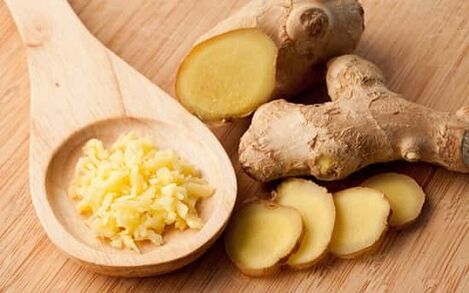
Ginger for varicose veins can be used as a remedy for internal or external use.So, ginger tea is a good way not only to prevent inflammation of the veins, but also to treat the disease at any stage of its manifestation.
Preparing this tea is very simple: just cut a small round piece of ginger from the root, pour boiling water over it and let it steep for 15 minutes.
It should be noted that in addition to normalizing blood circulation, such a drink also has a beneficial effect on metabolism, so drinking ginger is especially useful for those who have vein problems due to excess weight.
A ginger compress is prepared as follows: the root is finely grated, mixed with honey and applied to the inflamed vein for 3-4 hours.To enhance the effect, it is recommended to wrap your feet in something warm.
Useful properties of viburnum for varicose veins
Like ginger, viburnum can be used for varicose veins both as a compress and as a fortified drink.In the first case, the patient will need to take fresh viburnum berries, grind them into a paste, put the mixture on a cloth, apply it to the skin area with an inflamed vein and fix it with a bandage.
It is better to do this compress before going to bed and leave it overnight.
A drink fortified from viburnum, in essence, is a juice mixed with honey in a proportion of 2 tablespoons.the.honey for 500 ml of juice.You should drink it 2 tablespoons.the.4 times a day for a month and a half.
Effect of pumpkin on varicose veins
Everyone knows that pumpkin is an extremely healthy product containing many vitamins and microelements.To treat varicose veins, the internal pulp, previously freed from the seeds, is used.
This pulp should be thoroughly rubbed onto the limb with problem veins, wrapped in something warm and left to sit overnight.The remaining pulp can be stored in the refrigerator.
Since the effect of pumpkin compresses is very mild, you should be patient when using this treatment method.
Adam's apple for varicose veins
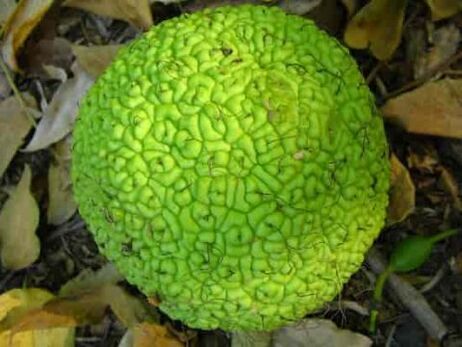
Adam's apple for the treatment of varicose veins is used in the form of an ointment, which is prepared as follows: a glass jar is taken, which is filled with a layer of lard 15 mm thick, then on top of the lard the fruits of the maclura (Adam's apple) are cut into slices with a layer of 10 mm, then another layer of lard and so on until the jar is filled.
It is important that the last layer is the lard layer.After the jar is filled, it is placed in a steam bath or oven over low heat for a day (it should not boil), after which it is filtered, cooled and rubbed 1-2 times during the day on problem areas.
Varicose veins are very afraid of lemon
For varicose veins, lemon can be used for therapeutic purposes both internally and externally in the form of pain-relieving compresses.This compress is easy to prepare.Take a lemon, cut it into slices, apply it to the inflamed areas and wrap it with a bandage or compressed paper.It is necessary to wear the compress during the day, replacing the lemon with fresh lemon 2-3 times.
Lemon juice cleans blood vessels and increases the elasticity of their walls, so anyone who has problems with veins or wants to prevent their appearance should include this citrus fruit in their diet.
One of the most effective traditional drugs against inflammation of the veins is considered to be the following: peel 6 lemons and squeeze the juice, chop 5 cloves of garlic and 3 leaves of golden mouth, add 2 cups of honey and mix everything well.
The resulting mixture is left to infuse in a glass container for 1 week in a dark place.This medicine is used 4 teaspoons.once a day for a month.
Treatment of varicose veins with potatoes
Potatoes for varicose veins are used in the form of compresses prepared from the tubers of this plant.
Take several potato tubers, wash and peel them, then grate them and apply a 1 cm layer on the inflamed veins.About 8 layers of gauze are wrapped on the potato layer, which is also soaked in potato juice on top.
This wrap should be kept for at least 4 hours and it is important to use freshly grated potatoes and not stale potatoes.
Mumiyo for varicose veins
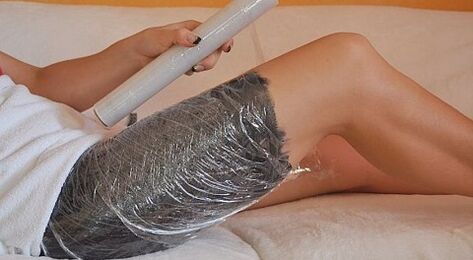
Shilajit is used for varicose veins due to its properties of dissolving congestion and tumors.Shilajit ointment is especially useful in the early stages of the disease.
This ointment is created as follows: for 5 parts of petroleum jelly is given 1 part of Altai resin, all this is carefully mixed and rubbed with soft, smooth movements three times a day into areas with inflamed veins.You can wash off the remaining ointment no earlier than an hour after applying it.
Shilajit can also be used internally: a piece of resin the size of a match head is mixed with 1 tablespoon.the.honey and milk and drink twice a day for a month.
Varicose veins: is fish oil used for varicose veins?
Fish oil is mainly used internally, which helps to normalize metabolism and reduce weight, being one of the main causes of congestion of the veins.However, there are other uses for fish oil.
Take fish oil and May honey in a 1:1 ratio and mix until smooth.The resulting ointment is applied to a linen cloth, wrapped around the sore limb and left to stand overnight.
Onion for varicose veins
The biggest effect for varicose veins is not the bulb itself, but its peel.Onion peels for varicose veins are used in various recipes.
2 tbsp.the.chopped peels are poured into 100 ml of vodka and infused for 7 days, then the tincture is filtered and taken 20 drops three times a day 15 minutes before meals.
2 tbsp.the.chopped peels, pour 2 cups of boiling water, leave covered for 6 hours, strain and drink a quarter of a glass three times a day before meals for a week and a half.
Badyaga relieves tension in varicose veins
Badyagi lotions are useful for soothing inflammation of the veins.The lotion mixture is prepared as follows: take 30 g of badyagi leaves and stems, chop them finely, pour a glass of boiling water and simmer for about 10 minutes, then cool to a comfortable temperature.
Cloth napkins are moistened in the resulting broth, wrapped around the legs and wrapped in a warm terry towel.The legs should be raised.After 30 minutes you can remove the compress.
Treatment of varicose veins with garlic
It is recommended to use garlic for varicose veins in the form of a compress, which is prepared as follows: take garlic with white peel and crush it, then add butter in a 1:2 ratio.
Before going to bed, the resulting ointment is applied to the inflamed veins and wrapped on top with permanent paper or with a bandage.In the morning, wash off the remaining ointment.The procedure must be repeated every day for several weeks.
How to take hydrogen peroxide?
Treatment of varicose veins with hydrogen peroxide can be done in 2 ways:
- Orally, starting with 1 drop every 3 tablespoons.the.water three times a day 2 hours after meals.Every day, the concentration of the consumed peroxide is increased by 1 drop, bringing it to 10 drops per day, then they take a break for 3 days and begin to take 10 drops 2 days after 3.
- Intravenously, a 0.15% hydrogen solution is administered, which allows the release of atomic oxygen, thereby cleaning the walls of the blood vessels.A single dose of the solution should not exceed 250 ml.
Iodine for varicose veins
Iodine mesh for varicose veins is applied in the same way as the back for colds.That is, a 5% iodine solution is applied to a cotton swab and straight lines are drawn along the varicose veins at intervals of 1 cm.
Then lines perpendicular to the same interval are drawn.It is better to make such a net at night, and before the first application it is necessary to test for an allergic reaction.
To do this, apply a small strip to a healthy area of the skin with a stick soaked in iodine, which should not be scratched or wet.After an hour, the iodine strip is washed off, and if there is no redness, treatment begins.
Is it possible to treat varicose veins with salt?
Salt for varicose veins is used for salt baths or dressings.It is believed that it is better to use sea salt.It is diluted with water to obtain a liquid mixture.This paste is used for salt seasonings.Salt dressings for varicose veins should be changed several times a day, keeping each for no more than 4 hours.
Some recipes recommend cooling the salt dough in the refrigerator at zero temperature, in the morning make a compress and keep it until the salt warms up, then remove the remains from the skin to avoid irritation.
The effect of treating varicose veins with salt dressings usually manifests itself within a month after the start of the procedures.
Treatment of varicose veins with soda
According to the recipe, warm water is poured into a large container and 200 g of baking soda and 70 g of alum are dissolved in it.All this is thoroughly mixed until completely dissolved, then the legs are placed in a container with water.
The duration of such a bath should be about 15 minutes.The course of treatment with such foot baths is episodic: 2 days after 1 for two weeks.
If the disease has risen high on the legs, you can use a bath with soda, but you should not prepare a more concentrated solution.After such a bath, the body is not dried, but wrapped in a towel.
Varicose veins: how to treat varicose veins with laundry soap?
Laundry soap can also be used to treat varicose veins.Take a bar of laundry soap (200 g) and pass it through a meat grinder, add 200 g of old lard and the same amount of onion and millet (preferably grind with a rolling pin).
All this must be mixed to form an ointment and left for a day.The resulting ointment is applied as a compress overnight, wrapped on top with a linen napkin and compressed paper.
Varicose veins: what clay is used for varicose veins?
Treatment of varicose veins with blue clay is considered the most optimal among all types of clay, since it is believed that this type of clay acts most effectively on the affected veins.Clay for varicose veins is used in the form of applications.
For application, blue clay for varicose veins is diluted with water until thick sour cream, then applied to areas of the skin with swollen veins 2 cm thick and tied on top with a terry towel.
The duration of such an application should be about two hours, then the clay can be washed off.It is recommended to carry out applications with clay daily for a month and a half, after which they can be replaced by wrapping the feet with a wet towel soaked in a clay solution.
Varicose veins: compresses for varicose veins
As you can see, treating varicose veins with compresses is a fairly common practice.In this case the compresses themselves can be dry or wet, either by applying cabbage leaves or by using oil or alcohol-based applications.This will not affect the quality of the treatment.It all depends on the recipe you choose.
It is also worth noting the ease of use of the tablets and the availability of medicines for their use.After all, there is nothing difficult in getting beets for a compress for varicose veins or the same cabbage.
But the therapeutic effect of such procedures is huge, because the effect occurs directly in the area where congestion of the veins occurs.The main thing is not to use products that the patient is allergic to.